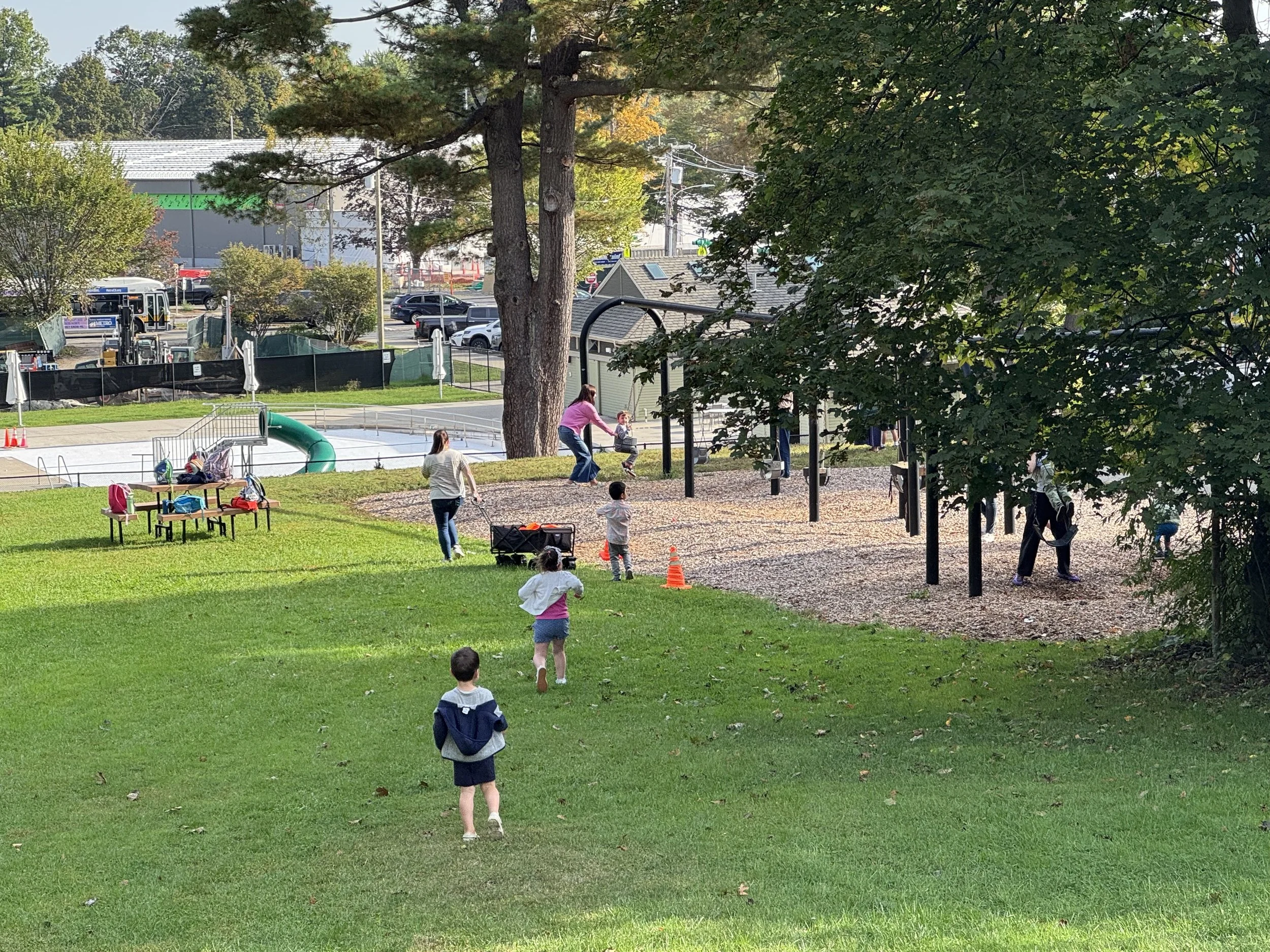
Our Reggio Emilia Approach at BCNS

At BCNS Preschool, our philosophy is inspired by the Reggio Emilia approach to early childhood education. This internationally respected model began in Reggio Emilia, Italy, after World War II, when a community of parents and teachers came together with a vision of building schools that honored children’s voices and potential. What grew from their efforts is now practiced worldwide: an approach that sees children as capable, curious learners who thrive when surrounded by beauty, community, and meaningful relationships.
For us, Reggio is a way of seeing and being with children. It means valuing their questions, respecting their ideas, and trusting their natural drive to make sense of the world. It also means building a school culture where teachers, children, and families are partners in the learning journey, and where classrooms are alive with creativity, collaboration, and joy.
Why It Matters
The Reggio Emilia approach nurtures skills that last far beyond preschool. By honoring children’s voices and curiosity, we prepare them not only for kindergarten, but for a lifetime of learning - creative, confident, and connected to their community.
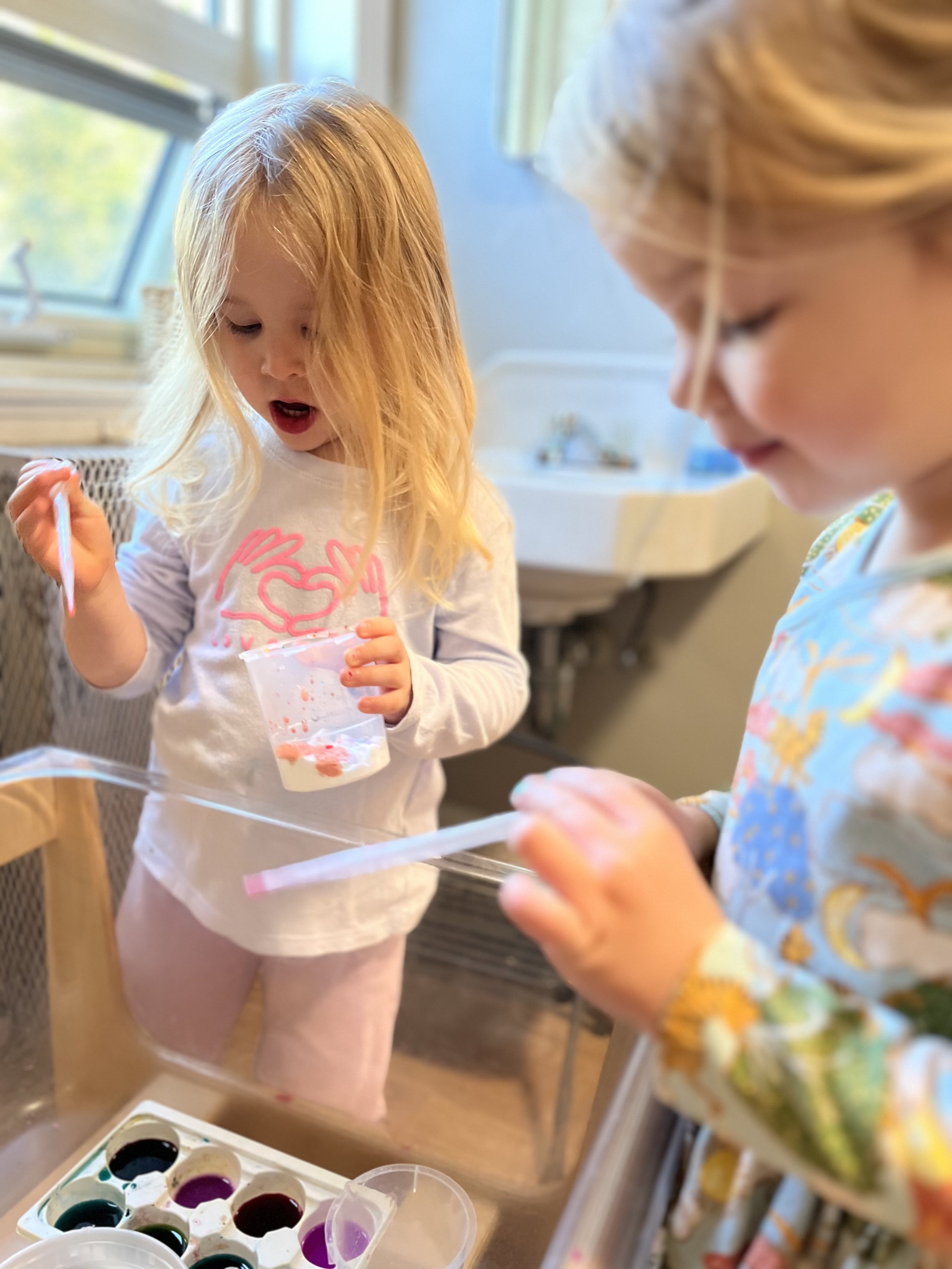
Reggio Emilia vs. Montessori
Parents often ask how the Reggio approach compares to Montessori. While both philosophies are child-centered and respect the child as a capable learner, they differ in their primary focus.
Reggio Emilia
Reggio Emilia, the approach we follow at BCNS, views learning as a fundamentally social experience. We focus on collaboration, community, and creativity. Our children work together on open-ended projects, learn to negotiate ideas with peers, and express themselves through art, science, and play. We believe this focus on relationships and problem-solving best prepares children for a connected world.
Montessori
Montessori generally creates a structured environment where children work individually on specific tasks to master skills. The focus is often on independence and self-reliance: “Help me do it myself.”
FAQs: Reggio Emilia
-
The Reggio Emilia approach is a play-based, child-centered philosophy from Italy. It values creativity, exploration, and collaboration, with children seen as active participants in their learning
-
At BCNS Preschool, teachers guide children through hands-on projects, inquiry, and daily play. The classroom environment and materials are carefully designed to spark curiosity and creativity.
-
No - BCNS follows the Reggio Emilia approach, not Montessori. While both encourage child-led learning, BCNS emphasizes play, collaboration, and community engagement.
-
Both are child-centered approaches, but Reggio Emilia emphasizes collaboration, group projects, and creativity, while Montessori often focuses on structured independence and individual work.
-
Families are considered partners in the learning process. At BCNS, parents share their time and talents, helping to create a strong, connected community.
-
Reggio Emilia schools foster creativity, critical thinking, and social-emotional growth, preparing children not just for kindergarten but for lifelong learning.